
📍 Poblacion, Makati | Editorial research: November 2026 | Photos: supplied by KuraPinas
Korean food in the Philippines can be remarkably good. Everyone knows the all-you-can-eat barbecue restaurants. But the more interesting story may be the ordinary Korean comfort dishes that have become main attractions in their own right.
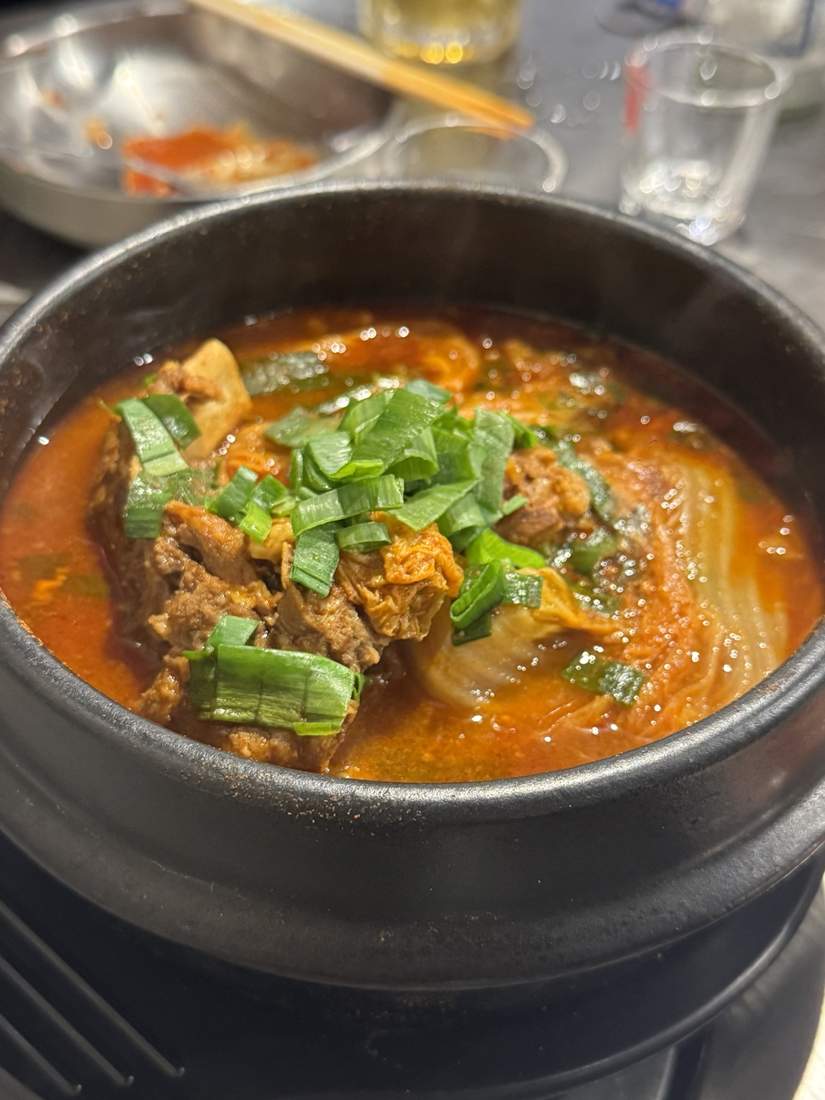
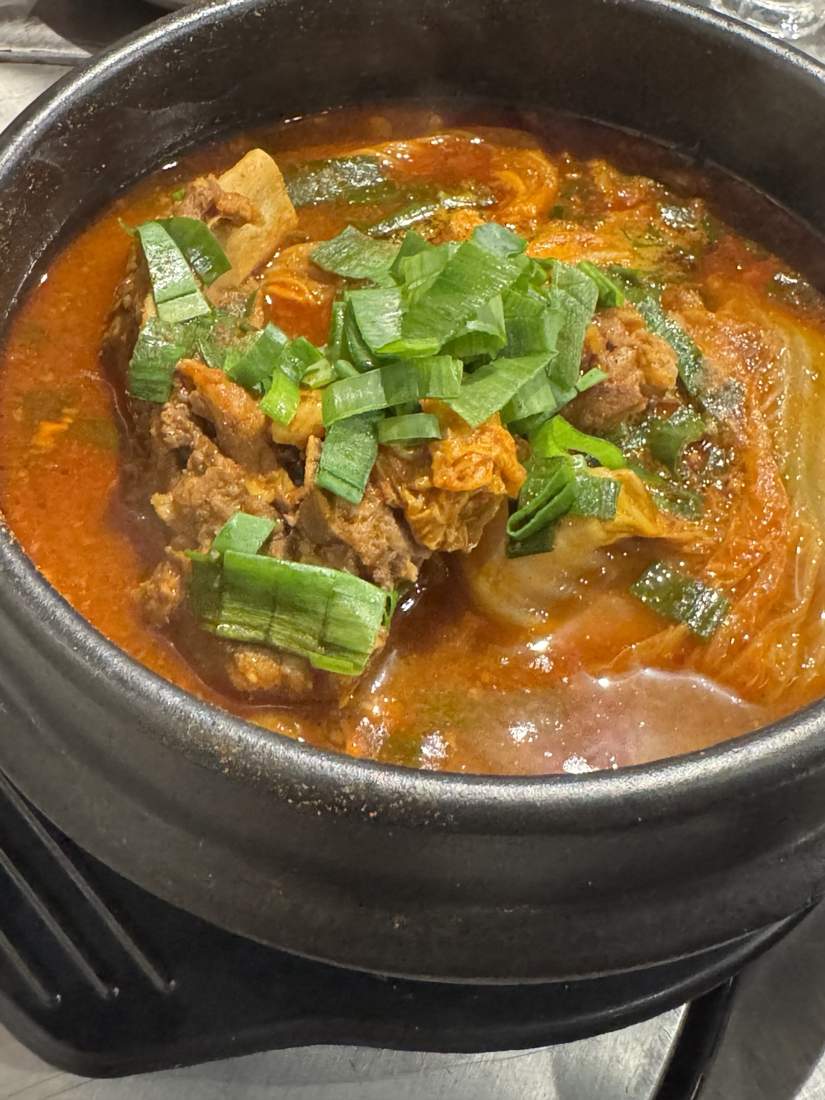
At Zhubajie Premium - Makati (쭈빠찌에 프리미엄 마카티), a black stone bowl of vivid red broth, bone-in pork and spring onions makes that point better than any slogan. This is a story about the pot of gamjatang—and the much larger Korean food culture that has taken root around Manila.
This is intentionally a cultural column, not a price-driven restaurant review. The meal is our doorway into the history of Korean communities in Malate, Pasay and Makati.
🍖 Gamjatang: a potato-sounding name, but pork bones steal the show
Gamjatang (감자탕) is a Korean stew built around slowly cooked pork neck or backbone, often with potatoes and vegetables. Gamja ordinarily means potato in Korean, yet the origins of the dish name remain debated, including a theory involving a term for pork bones. A 2026 Korean cultural publication makes clear that the etymology has no single settled answer.
It is striking to find a dish less familiar in Japanese barbecue restaurants presented as a signature in Manila. The operating group, Companions Hospitality Group, says its pork bones are simmered for more than 24 hours. That is the company’s stated method, not something independently timed in the kitchen.
🥢 The side dishes are not an afterthought
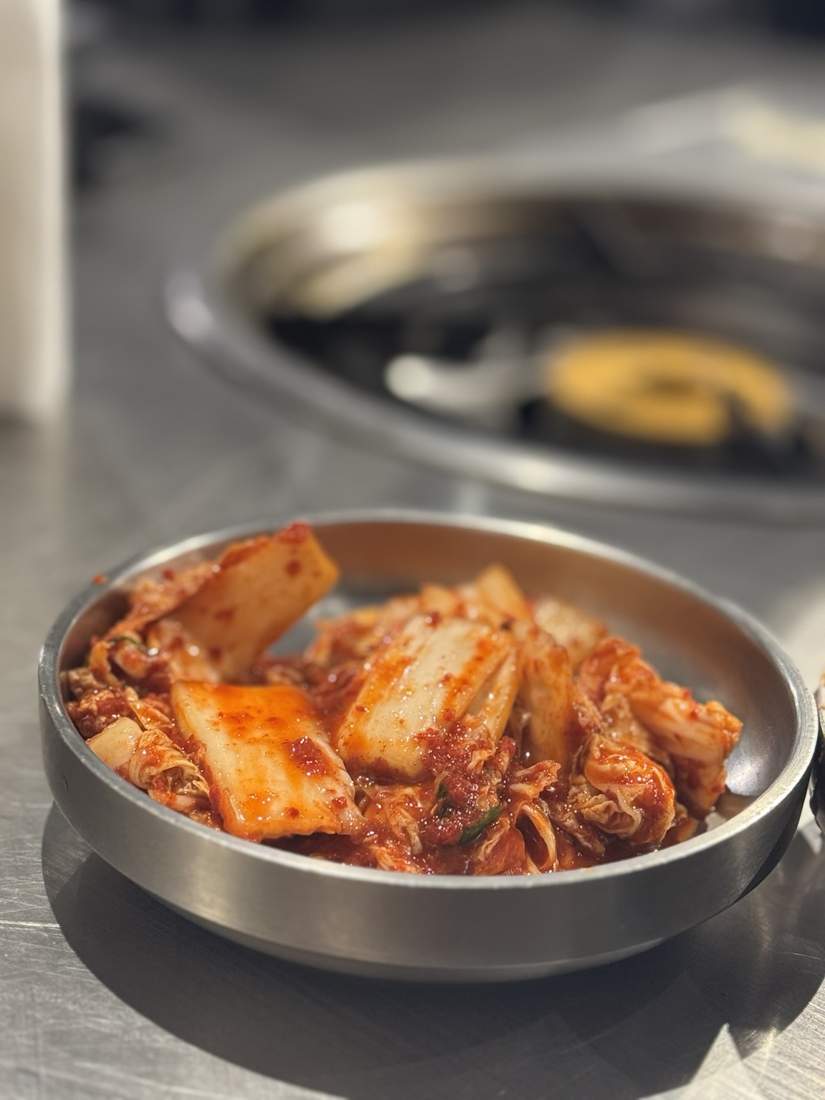
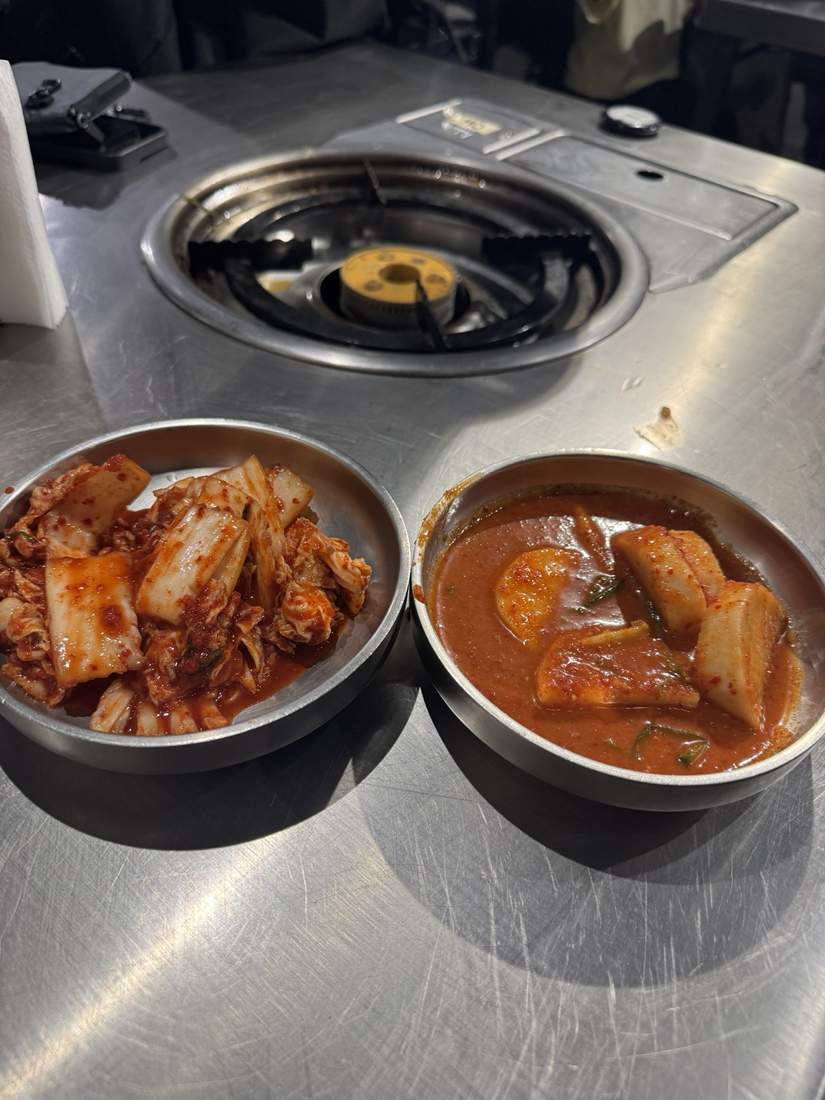
A spread of banchan—Korean side dishes—makes the table look abundant before the main pot even takes center stage. In the photos are kimchi, greens, egg dishes and other small accompaniments. Their precise ingredients are not all identifiable from photographs alone.
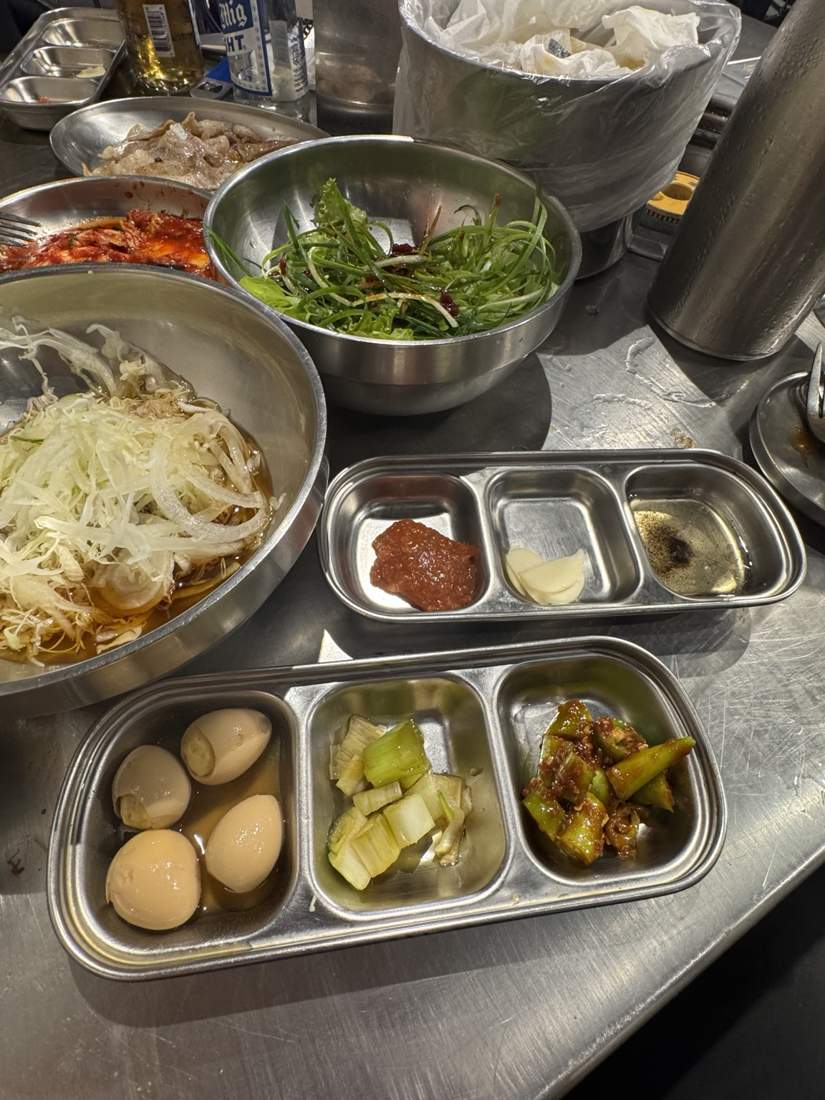
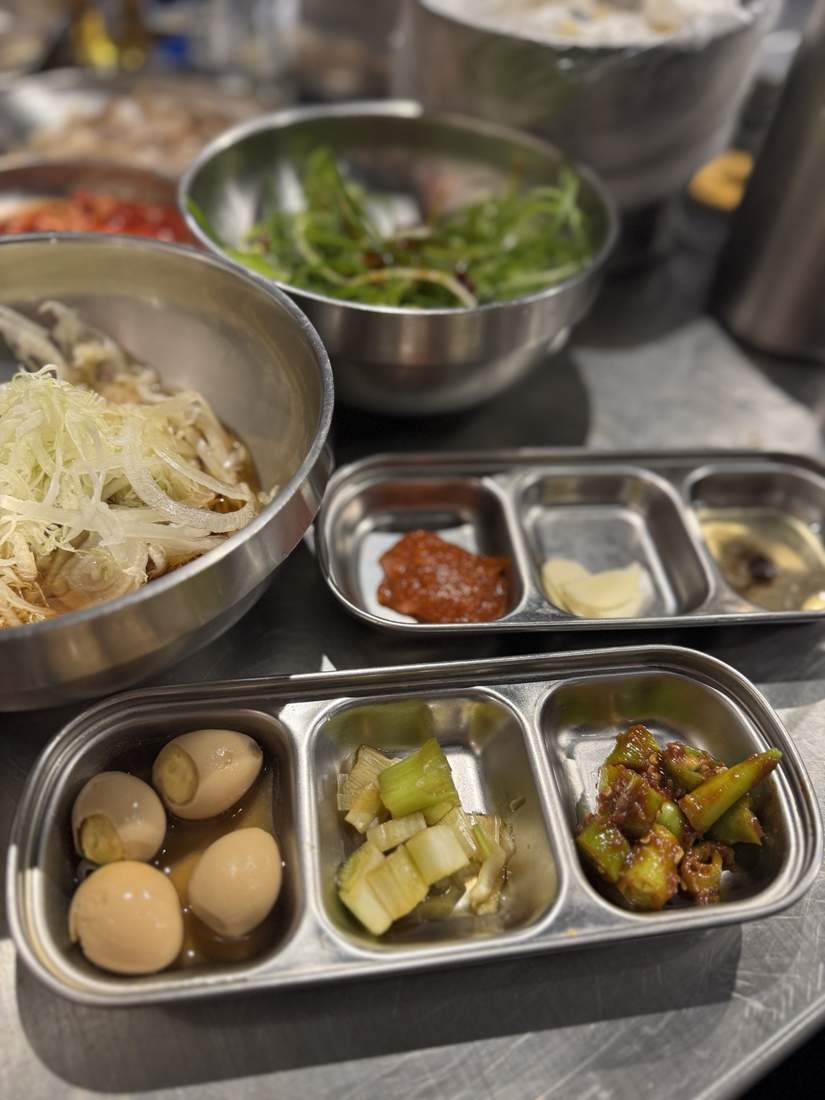
The pleasure is in the contrasts: fermented tang, garlic, fresh vegetable crunch, deeply savory meat and hot broth. You can build a different combination with every bite.
📊 How many Korean restaurants are there? The definition matters
Commercial directory provider POI Data listed 3,627 Korean restaurant entries in the Philippines as of August 2025, including 1,006 in Metro Manila—about 28% of the national total. Its city-level counts were 196 in Manila, 79 in Makati and 56 in Pasay.
These are citywide directory counts, not Malate-only or Poblacion-only counts. They are also not an official census of currently operating, licensed restaurants. A 2022 Philippine freedom-of-information request received a reply that the requested Korean-restaurant-specific government figures were not available.
A different Korean government dataset counted 4,644 overseas outlets of Korean food-service companies worldwide in 2025, 6.3% of them in the Philippines. That measures the overseas operations of Korean restaurant businesses, not every restaurant classified as Korean in a commercial directory. The figures must not be added together.
🌃 Malate is an officially designated Koreatown—not just a nickname
Manila City Ordinance No. 8726, approved on February 9, 2021, formally designated parts of Barangays 699 and 702 in Malate as Manila Korea Town, intended as a business and tourism hub.
In an August 2026 report, The Korea Herald cited Manila Police District figures putting the Koreatown area at around 37,160 square meters, with roughly 500 Korean nationals and around 100 Korean-owned businesses. Those businesses include more than restaurants—bars, retail shops and other services also count.
That helps explain why Korean-language signs, groceries, nightlife and restaurants appear so close together. Demand draws businesses, and businesses reinforce the community.
🇵🇭🇰🇷 A relationship older than K-pop
The Korean embassy says the Philippines established diplomatic relations with South Korea on March 3, 1949, the first Southeast Asian country to do so. During the Korean War, 7,420 Filipino soldiers served in support of South Korea. The connection predates the modern Korean Wave by decades.
In the late 1990s, demand for English-language education helped bring more Koreans to the Philippines for study and longer stays. Korea JoongAng Daily was already documenting the trend in 2007. Over time, Korean eateries serving residents and students also reached a growing Filipino audience interested in Korean dramas, music and food.
For another sign of the scale of exchange, the Philippine Bureau of Immigration reported approximately 1.76 million South Korean visitors in 2024. Tourism does not explain everything, but it contributes to the size and diversity of the market.
🗺️ Malate, Pasay and Poblacion each feel different
Malate is associated with an established Korean community and its everyday businesses; Pasay connects dining with the airport, hotels and bay-area commercial districts; and Poblacion in Makati mixes Korean restaurants into a diverse scene of international food and nightlife. These are editorial impressions of the neighborhoods, not official cuisine-district boundaries.
Zhubajie Premium’s Makati location is on Don Pedro Street in Poblacion. According to its operator, the brand name comes from Zhu Bajie, the pig character from the Chinese classic Journey to the West, and its atmosphere takes inspiration from 1980s retro Korea. A Chinese literary name, Korean pork-bone stew, and a Makati dining room: that cultural combination is part of the fun.
🍲 Why does the food feel so strong?
One possibility is the mix of Korean long-stay residents, short-term visitors and Filipino Korean-food fans. Their shared demand may help sustain restaurants centered on soup, stews and home-style dishes—not only crowd-pleasing barbecue.
That is an interpretation, not proof that every Korean-run restaurant is excellent. Still, the variety makes Korean dining in the Philippines rewarding to explore. Next time, consider looking beyond samgyeopsal to gamjatang, seolleongtang, sundubu or braised dishes.
📍 Featured restaurant: Zhubajie Premium - Makati (쭈빠찌에 프리미엄 마카티), GLDF JKL Building, 5385 Don Pedro, Poblacion, Makati. Find it on Google Maps. No unverified dish price is quoted here.
🔎 Sources (accessed November 2026)
- Companions Hospitality Group (brand concept and cooking method as stated by operator) / Corner Makati listing (location)
- Manila City Council, Ordinance No. 8726 / The Korea Herald, August 18, 2026 (designation and community estimates)
- POI Data, August 2025 / Philippine FOI, 2022 (commercial counts and limits of official data)
- Korean Embassy / Korea JoongAng Daily, 2007 / Philippine Bureau of Immigration (historical exchange)
- Korean cultural magazine KOREA, March 2026 / Korea.net, 2025 overseas food-service survey (food background and separately defined chain statistics)
Food descriptions are based on original photos and the contributor’s dining impression. Where appearance alone cannot confirm price, precise ingredients or flavor, this column avoids asserting them. Statistics are limited to the dates and definitions of the cited sources.